Rajasthan, India’s vibrant desert state, is renowned for its rich cultural heritage, which is beautifully reflected in its traditional attire. The top 10 Rajasthani traditional dress for men and women showcase the state’s artistic brilliance and centuries-old craftsmanship.
From the intricately designed Ghagra Choli to the elegant Bandhani Saree and the regal Jodhpuri Suit, each garment carries a unique blend of history, culture, and artistry.
These outfits are not merely clothing but symbols of Rajasthan’s diverse traditions, worn with pride during festivals, weddings, and special ceremonies. Whether it’s the royal Rajputi Poshak or the vibrant Lehenga, Rajasthan’s traditional dresses continue to influence modern fashion, preserving the state’s timeless elegance.
What Are the Key Elements of Traditional Rajasthani Attire for Women?
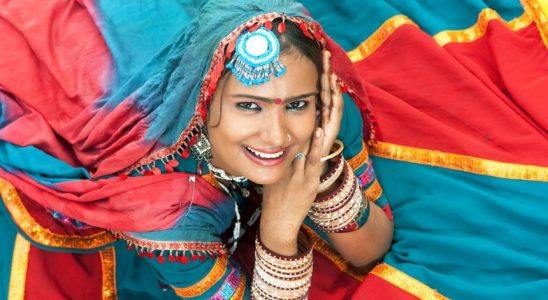
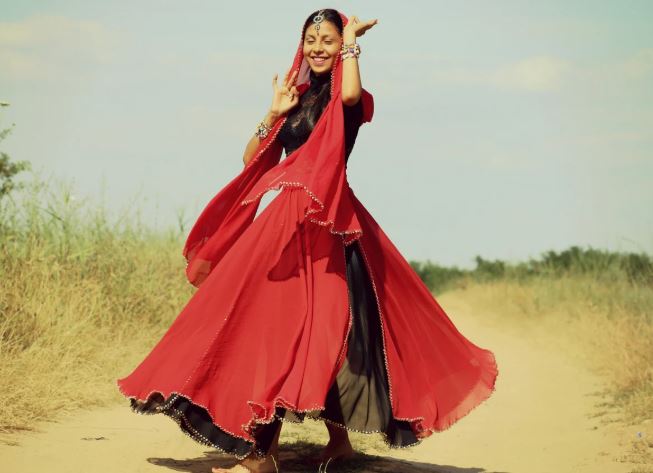
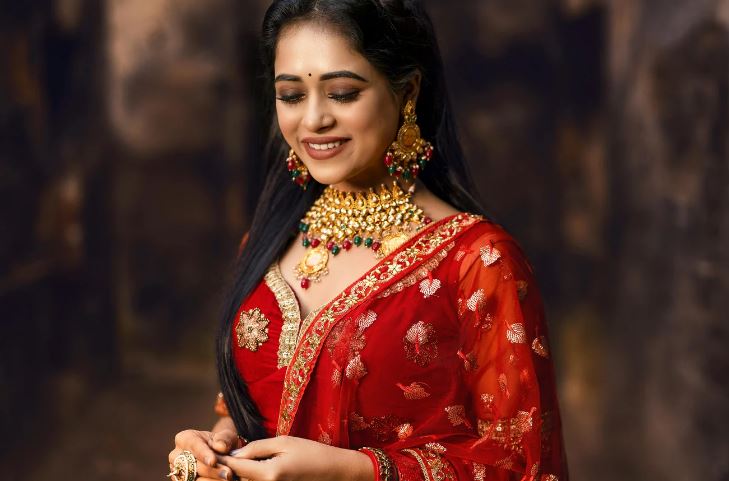
Traditional Rajasthani attire for women is an amalgamation of grace, vibrancy, and cultural richness. The three essential elements are the Ghagra, Choli, and Odhani, each carrying cultural significance. The Ghagra, a long pleated skirt, is heavily embellished with mirror work, intricate embroidery, and bright hues like red, orange, and yellow.
This skirt is paired with the Choli, also known as Kanchli, which is a fitted blouse. The Choli is designed to be both functional and decorative, often adorned with sequins, beads, and Gota Patti work.
Completing this outfit is the Odhani or Chunari, a lightweight veil or scarf that women drape gracefully over their heads or shoulders, symbolizing modesty and tradition. The fabrics used, such as silk, cotton, and chiffon, allow for ease of movement in Rajasthan’s hot climate.
This attire is not just limited to daily wear but is often worn during festivals, ceremonies, and weddings, reflecting the pride and artistic heritage of the region.
How Do Rajasthani Men Dress Traditionally for Different Occasions?
Rajasthani men’s traditional attire is deeply rooted in the cultural identity of the region, reflecting the pride and honor of the wearer. A typical outfit includes the Angrakha, Dhoti, and Pagri (turban).
The Angrakha is a tunic-like garment tied on the side, available in various lengths, from knee-length for casual wear to ankle-length versions worn for formal occasions. The Dhoti is a long piece of cloth wrapped around the waist and legs, paired with a Kurta.
This attire is both functional and symbolic, representing the simplicity of desert life. The Pagri or Safa, an elaborate turban, holds special significance as it symbolizes honour and regional identity.
Different regions in Rajasthan have distinct styles of tying the turban, and the colour, fabric, and design often indicate the wearer’s social status or the occasion being celebrated. On special occasions like weddings, men might wear the Jodhpuri suit, an elegant fusion of Indian and Western styles.
What Role Does Fabric Play in Rajasthani Traditional Clothing?
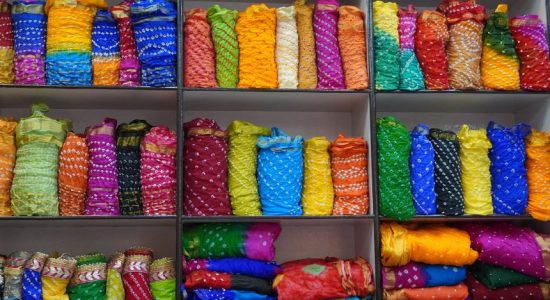
Fabric plays a central role in the design and functionality of Rajasthani traditional attire, with each material contributing to the cultural expression and comfort required in the desert climate. One of the most famous fabrics is Leheriya, known for its wave-like tie-dye patterns, typically used in turbans and sarees.
This fabric is lightweight, making it ideal for the hot weather while also adding a vibrant visual appeal. Another widely used fabric is Bandhani, a tie-dye technique characterized by small, intricate dots that form various patterns. Bandhani is commonly seen in sarees, dupattas, and turbans.
Additionally, Gota Patti is a decorative embroidery technique where gold and silver ribbons are sewn onto fabrics like silk and georgette, giving the attire a regal touch.
These fabrics and techniques not only contribute to the aesthetic beauty of Rajasthani clothing but also represent the state’s long-standing tradition of craftsmanship. The use of these fabrics varies by occasion, with simpler cotton fabrics for everyday wear and heavier silk and georgette for festivals and weddings.
Why Is Jewellery an Integral Part of Rajasthani Traditional Dress?
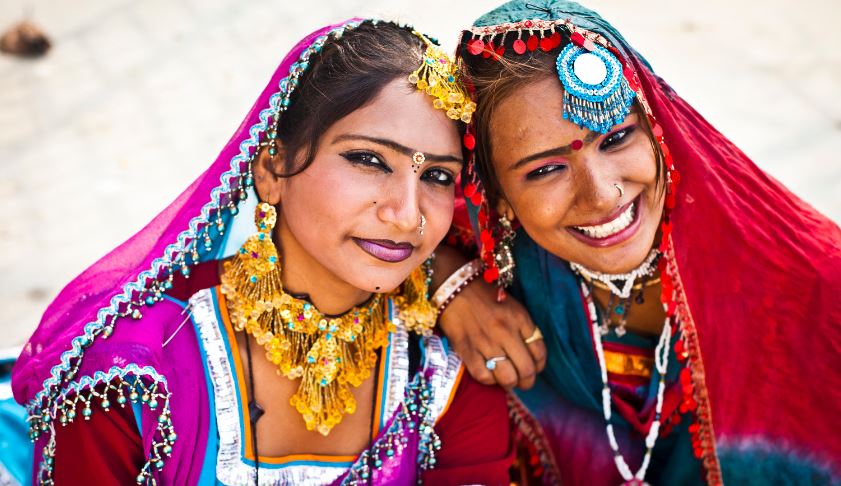
Jewellery is an essential component of Rajasthani traditional attire, adding elegance and cultural depth to the look. Women in Rajasthan adorn themselves with an array of traditional jewellery pieces, each holding symbolic importance.
The Borla, a spherical maang tikka worn on the forehead, is a prominent accessory, especially during weddings. Other significant pieces include the Raani Haar, a long necklace often made of gold or precious stones, and Kaanbali or earrings, which are intricate and frequently decorated with pearls or beads.
Jewellery is not limited to women; men also wear traditional accessories, such as Balis (ear studs) and Kamarbandh (waistbands). These pieces are crafted from gold, silver, and sometimes brass or other metals.
Jewellery in Rajasthan is not merely ornamental but often serves as a status symbol, with the design, material, and intricacy of the pieces reflecting the wearer’s social and economic position. Furthermore, tribal communities in Rajasthan have their unique styles of jewellery, often made from silver and worn by both men and women during festivals.
How Do Regional Variations Influence Rajasthani Attire?
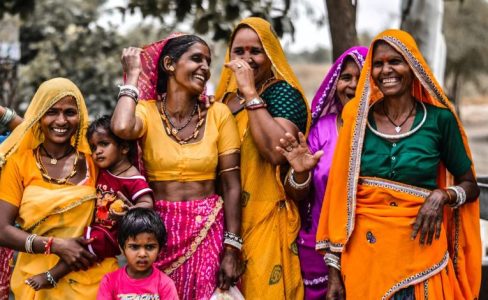
Rajasthan is a state of diverse cultures, and this diversity is reflected in its traditional attire, with each region contributing its own unique style. One of the most noticeable regional variations is in the style of the Pagri (turban).
In Jaipur, for instance, angular pagris are popular, while Udaipur favours flatter styles. Jodhpur is known for pagris with curved bands, which add a unique regional flavour to the traditional look. The Ghagra Choli also sees variations depending on the region, with some areas using more intricate Gota Patti work, while others prefer mirror work or embroidery.
Additionally, the Bhil tribe in Rajasthan has its distinct traditional wear, the Pachewara, which includes a combination of a Ghagra, Choli, and Odhani.
These regional influences not only add to the richness of Rajasthani attire but also highlight the cultural diversity within the state. Each region’s climate, customs, and historical background have shaped its distinct style, making Rajasthani clothing a vibrant tapestry of traditions.
Top 10 Rajasthani Traditional Dress
1. Ghagra Choli (Women)
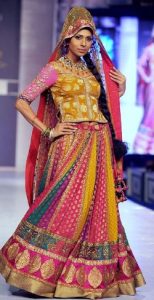
Image – Source
The Ghagra Choli is the quintessential traditional dress for women in Rajasthan, deeply embedded in the cultural and historical fabric of the region. It consists of two primary pieces: the Ghagra, a full-length skirt, and the Choli or blouse, which is often paired with an Odhni (veil).
Known for its vibrant colours, detailed embroidery, and mirror work, the Ghagra Choli is a symbol of grace and elegance, commonly worn during festivals and ceremonial occasions. The attire not only highlights the wearer’s beauty but also represents the region’s artistic craftsmanship, making it an essential part of Rajasthan’s cultural identity.
The design of the Ghagra Choli varies across regions, with each style reflecting local traditions. Some regions favour heavier embellishments and intricate mirror work, while others prefer simpler patterns with bold colours.
The Odhni, draped across the shoulder or over the head, completes the outfit, adding a sense of modesty and cultural respect. Whether worn during weddings, festivals like Navratri, or folk performances, the Ghagra Choli has transcended generations, maintaining its significance as a symbol of femininity and cultural pride in Rajasthan.
Ghagra Choli Dress Details
| Attribute | Details |
| Dress Name | Ghagra Choli (for women), paired with Odhni or Dupatta. |
| Cultural Significance | Symbolizes the rich traditions of Rajasthan and Gujarat, often worn by women during folk dances and ceremonies. |
| Fabric & Material | Crafted using fabrics like silk, cotton, chiffon, and georgette, focusing on vibrant and intricate embroidery. |
| Key Design Features | Features heavy embellishments, mirror work, and vibrant hues with elaborate embroidery on the choli and skirt. |
| Draping Style | The ghagra (skirt) is worn with pleats, while the dupatta is draped gracefully across the shoulder or head. |
| Occasion-Based Wear | Worn during festivals like Navratri, weddings, and other cultural celebrations across northern India. |
| Traditional Accessories | Complemented by silver or gold jewellery, including earrings, bangles, anklets, and a decorative waist belt. |
| Historical Origins | Dating back to the royal courts of Rajasthan and Gujarat, reflecting the artistic and cultural pride of the regions. |
| Regional Variations | Unique versions can be found in different regions, with variations in embroidery, mirror work, and colour patterns. |
| Common Colour Schemes | Bright shades like red, orange, blue, green, and yellow, often enhanced with gold or silver accents. |
| Modern Adaptations | Contemporary designers are infusing modern cuts and patterns, creating fusion styles for casual and festive wear. |
| Craftsmanship | Handcrafted with attention to detail by skilled artisans, using techniques like Zari, Zardozi, and Bandhani. |
| Practicality & Comfort | The ghagra offers ease of movement, making it comfortable for festive dancing, while the fabric is suited for warm climates. |
| Symbolism & Meaning | Represents femininity, grace, and cultural heritage, especially in Rajasthani and Gujarati communities. |
| Celebratory Role | Essential attire for Navratri, Garba, and wedding festivities, symbolizing joy, prosperity, and tradition. |
| Market Availability & Cost | Available in a wide range from affordable daily wear to luxurious versions for weddings, with handcrafted options highly valued. |
2. Bandhani Saree (Women)
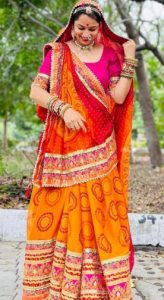
Image – Source
The Bandhani Saree is another iconic piece of Rajasthani traditional clothing, known for its vibrant colours and intricate tie-dye patterns. The term “Bandhani” comes from the Sanskrit word “Bandh,” meaning to tie.
The fabric is created using a special technique where the cloth is tied at various points before being dyed, resulting in the unique dot patterns. These sarees are a favorite during festive seasons, weddings, and cultural celebrations. Rajasthani women often pair Bandhani sarees with traditional jewellery, making it a staple for religious occasions and ceremonies.
The saree is available in a variety of fabrics, ranging from silk to cotton, each offering a different look and feel. Depending on the occasion, women opt for heavier versions made of silk, adorned with Gota Patti work or mirror embellishments.
The vibrant colours, combined with the artistic tie-dye techniques, make the Bandhani saree a symbol of joy and celebration. The saree is draped traditionally, with the pallu (end piece) often covering the head as a mark of respect and modesty.
Bandhani Saree Dress Details
| Attribute | Details |
| Dress Name | Bandhani Saree (for women). |
| Cultural Significance | Symbolizes festivity and joy, especially during religious ceremonies and weddings in Rajasthan. |
| Fabric & Material | Crafted from silk, cotton, and georgette, known for its unique tie-dye (Bandhej) technique. |
| Key Design Features | Characterized by intricate dot patterns formed through tie-dye methods, often complemented by embroidery and Gota Patti. |
| Draping Style | Traditional saree draping, with the pallu covering the head for modesty during religious or ceremonial occasions. |
| Occasion-Based Wear | Worn during festivals, weddings, and other cultural celebrations in Rajasthan. |
| Traditional Accessories | Paired with Rajasthani jewellery like Borla (forehead ornament), bangles, and heavy necklaces. |
| Historical Origins | Originated in the ancient Indian subcontinent, with Rajasthan being a primary hub for Bandhani techniques. |
| Regional Variations | Different regions of Rajasthan showcase varying tie-dye patterns and colour schemes, like Sikar and Udaipur versions. |
| Common Colour Schemes | Predominantly red, yellow, green, and blue, with white dot patterns achieved through the tie-dye process. |
| Modern Adaptations | Contemporary designers incorporate Bandhani patterns in modern saree designs and fusion wear. |
| Craftsmanship | Traditionally handcrafted by skilled artisans, the tie-dye process is passed down through generations. |
| Practicality & Comfort | The lightweight fabric makes it comfortable to wear, especially in hot climates, while maintaining an elegant appearance. |
| Symbolism & Meaning | Represents joy, celebration, and cultural heritage, especially significant in Hindu festivals and weddings. |
| Celebratory Role | Essential attire for religious festivals like Teej and Gangaur, as well as bridal wear during weddings. |
| Market Availability & Cost | Available in a range of affordable daily wear and luxury options with intricate Gota Patti for festive occasions. |
3. Rajputi Poshak (Women)
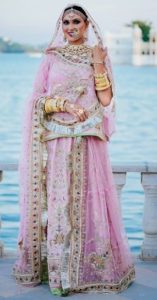
Image – Source
The Rajputi Poshak is a traditional and regal outfit worn by Rajput women, especially during formal events like weddings and religious ceremonies. This elegant ensemble is a reflection of the royal lineage of Rajasthan, characterized by its grandeur and intricate embroidery.
The Rajputi Poshak consists of a long skirt (Ghagra), a blouse (Choli), and a veil (Odhni), each piece crafted meticulously with heavy embroidery and embellishments like Zari, Zardozi, and Gota Patti work.
Rajputi Poshak is not just a dress but a symbol of honour and pride among Rajput women. Often made from rich fabrics like silk and velvet, it is worn during weddings, family celebrations, and festivals like Diwali.
The Odhni is an integral part of the attire, symbolizing respect and modesty. This traditional outfit holds historical significance, representing the royal heritage of the Rajput community, with its roots in the royal courts of Rajasthan.
Rajputi Poshak Dress Details
| Attribute | Details |
| Dress Name | Rajputi Poshak (for women). |
| Cultural Significance | Represents the royal heritage and pride of the Rajput community, worn during weddings and religious ceremonies. |
| Fabric & Material | Made from luxurious fabrics like silk, velvet, and chiffon, often adorned with Zari, Zardozi, and Gota Patti work. |
| Key Design Features | Characterized by heavy embroidery, vibrant colours, and the use of embellishments like Zari and Gota Patti. |
| Draping Style | The Odhni is draped over the head or across the shoulders, symbolizing modesty and respect. |
| Occasion-Based Wear | Primarily worn during weddings, family gatherings, and religious festivals like Diwali and Karva Chauth. |
| Traditional Accessories | Paired with traditional jewellery like Kundan, Jadau, and Polki sets, including Borla, bangles, and necklaces. |
| Historical Origins | Originated in the royal courts of the Rajput kings, showcasing the regal elegance and power of the Rajput dynasty. |
| Regional Variations | Different regions of Rajasthan have subtle variations in embroidery patterns and fabric choices for the Rajputi Poshak. |
| Common Colour Schemes | Vibrant shades like red, maroon, royal blue, and green, with golden or silver embellishments. |
| Modern Adaptations | Modern designers have incorporated Rajputi Poshak elements into contemporary bridal wear and formal attire. |
| Craftsmanship | Handcrafted by skilled artisans, using traditional techniques passed down through generations. |
| Practicality & Comfort | The dress, while heavy with embroidery, is designed to offer ease of movement, making it comfortable for extended wear during celebrations. |
| Symbolism & Meaning | Symbolizes royalty, femininity, and cultural pride, particularly in Rajput families. |
| Celebratory Role | Essential attire for weddings and religious ceremonies, representing prosperity, tradition, and the royal Rajput legacy. |
| Market Availability & Cost | Available as bespoke designs for high-end weddings, with simpler versions for festive wear. |
4. Odhani (Women)
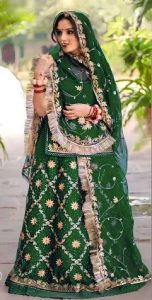
Image – Source
The Odhani, also known as Chunari, is a key accessory that completes the traditional Rajasthani women’s attire. This long piece of cloth, typically around 2.5 to 3 meters in length, is worn over the Ghagra Choli or Rajputi Poshak and serves both as an ornamental and functional piece of clothing.
The Odhani is designed with intricate embroidery, mirror work, and Bandhani (tie-dye) patterns, and it adds grace and modesty to the overall look. In Rajasthani culture, the Odhani holds significant meaning, often used to symbolize respect when worn over the head, especially in front of elders.
Crafted from light fabrics like cotton or silk, the Odhani is often brightly coloured, with shades of red, yellow, and green being the most popular. For formal occasions, women wear heavily embellished Odhanis, making them an essential part of wedding attire and festive clothing.
The Odhani is also a versatile accessory that varies in design depending on the region within Rajasthan, with different communities adding their unique touch to its patterns and fabric choices.
Odhani Dress Details
| Attribute | Details |
| Dress Name | Odhani (for women), also known as Chunari. |
| Cultural Significance | Symbolizes respect and modesty, often worn over the head in the presence of elders or during religious ceremonies. |
| Fabric & Material | Crafted from light fabrics such as cotton, silk, and georgette, with intricate patterns and embellishments. |
| Key Design Features | Features mirror work, embroidery, and tie-dye patterns, often in bright colours. |
| Draping Style | Typically draped over the head or across the shoulders, depending on the occasion and setting. |
| Occasion-Based Wear | Worn during religious ceremonies, weddings, and cultural festivals, often complementing the Ghagra Choli or Rajputi Poshak. |
| Traditional Accessories | Paired with traditional jewellery like nose rings, anklets, and bangles to complete the ensemble. |
| Historical Origins | Has been an integral part of Rajasthani women’s attire for centuries, symbolizing cultural identity and respect for tradition. |
| Regional Variations | Different regions feature varying designs and techniques, such as Bandhani tie-dye in Jodhpur and Gota Patti work in Jaipur. |
| Common Colour Schemes | Bright shades of red, yellow, green, and blue, often adorned with silver or gold accents. |
| Modern Adaptations | Contemporary designers have modernized the Odhani by incorporating lighter fabrics and simpler designs for everyday wear. |
| Craftsmanship | Handcrafted by skilled artisans, using traditional techniques like Bandhani and Gota Patti to create intricate patterns. |
| Practicality & Comfort | The lightweight fabric and easy draping style make it a comfortable accessory for both daily… or occasional wear. |
| Symbolism & Meaning | Represents modesty, respect, and cultural pride, especially during religious occasions and in front of elders. |
| Celebratory Role | Essential during weddings and religious festivals, adding a traditional touch to women’s attire. |
| Market Availability & Cost | Widely available, from simple cotton Odhanis for daily use to heavily embellished ones for festive occasions, ranging from affordable to luxury. |
5. Angrakha (Men)
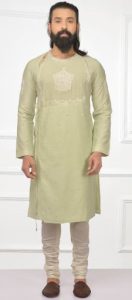
Image – Source
The Angrakha is a traditional men’s garment in Rajasthan, historically worn by royal families and warriors. The word “Angrakha” means “protecting the body” in Hindi, and it is a long tunic-like robe that wraps across the body and ties at the side.
This garment was originally designed for comfort and ease of movement in the hot desert climate while also providing a protective layer. Angrakhas are typically made from lightweight cotton for everyday wear, but they are crafted from more luxurious fabrics like silk or brocade for formal occasions.
In terms of design, Angrakhas are often embellished with embroidery, mirror work, or block prints, depending on the wearer’s social status and the occasion.
Today, the Angrakha has become a fashionable choice for men during festivals, weddings, and cultural events. It is commonly paired with a Dhoti or Pyjama, with a Pagri (turban) adding a final touch of regality to the outfit.
Angrakha Dress Details
| Attribute | Details |
| Dress Name | Angrakha (for men). |
| Cultural Significance | Historically worn by warriors and royalty, symbolizing protection and elegance. |
| Fabric & Material | Made from cotton, silk, or brocade, depending on the occasion. |
| Key Design Features | Wrap-around style with ties on the side, often embellished with embroidery or mirror work. |
| Draping Style | Worn over a Dhoti or Pyjama, with the upper body covered by the tunic. |
| Occasion-Based Wear | Worn during festivals, weddings, and formal events, especially by men of higher social status. |
| Traditional Accessories | Paired with a Pagri (turban) and sometimes with jewellery like ear studs or a waist sash. |
| Historical Origins | Originated as a protective garment for warriors, evolving into formal wear for royalty in Rajasthan. |
| Regional Variations | Different regions showcase variations in fabric choices and embroidery techniques, with Udaipur and Jodhpur styles being distinct. |
| Common Colour Schemes | Earthy tones like beige, brown, and white for everyday wear, while festive versions use brighter colours like red and blue. |
| Modern Adaptations | Modern designers have simplified the Angrakha for casual and semi-formal wear, while retaining its cultural essence. |
| Craftsmanship | Typically handcrafted, using techniques like block printing and embroidery. |
| Practicality & Comfort | The wrap-around style makes it comfortable for movement, especially in warm climates. |
| Symbolism & Meaning | Represents protection, honor, and tradition, often worn by men during significant cultural events. |
| Celebratory Role | Commonly worn during festivals like Diwali and cultural events, symbolizing Rajasthan’s royal past. |
| Market Availability & Cost | Available in a range from casual cotton versions to high-end silk designs, with handcrafted Angrakhas highly valued. |
6. Jodhpuri Suit (Men)
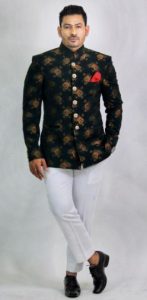
Image – Source
The Jodhpuri Suit, also known as the Bandhgala, is a classic example of the fusion between Indian and Western fashion. Originating from the royal family of Jodhpur, this formal suit consists of a fitted coat with a closed neck paired with trousers.
The Jodhpuri Suit became popular due to its elegant design and the comfort it offers, making it a preferred choice for weddings, formal gatherings, and high-profile events. The suit’s structured cut and rich fabrics, often silk or velvet, give it a regal appearance that reflects the aristocratic lineage of Jodhpur.
Traditionally, the Jodhpuri Suit is adorned with minimalistic embroidery or embellishments like buttons made of semi-precious stones, adding a subtle touch of luxury.
It is a popular choice for grooms and other male members of the wedding party. In modern times, it has evolved to include lighter fabrics and contemporary designs while still retaining its signature closed-neck style.
Jodhpuri Suit Dress Details
| Attribute | Details |
| Dress Name | Jodhpuri Suit (for men), also known as Bandhgala. |
| Cultural Significance | A royal outfit that blends Indian and Western styles, originating from the princely state of Jodhpur. |
| Fabric & Material | Made from rich fabrics like silk, velvet, and wool, often with subtle embroidery or embellishments. |
| Key Design Features | Fitted coat with a closed neck (Bandhgala), paired with trousers, exuding a regal and elegant appearance. |
| Draping Style | The coat is worn buttoned up, with tailored trousers completing the ensemble. |
| Occasion-Based Wear | Worn during weddings, formal events, and high-profile gatherings, particularly in aristocratic or royal families. |
| Traditional Accessories | Often paired with cufflinks, pocket squares, or a turban for added regality. |
| Historical Origins | Originated in the royal courts of Jodhpur, combining Western suits with traditional Indian elements. |
| Regional Variations | Variations include different fabric types, with Udaipur and Jaipur styles incorporating lighter fabrics for warmer climates. |
| Common Colour Schemes | Classic shades like navy, black, and maroon, with subtle gold or silver accents. |
| Modern Adaptations | Contemporary versions feature slim cuts and lighter materials, making the Jodhpuri suit a versatile option for modern weddings and events. |
| Craftsmanship | Handcrafted by skilled tailors, often with bespoke designs for weddings and formal occasions. |
| Practicality & Comfort | The tailored fit offers a comfortable yet formal appearance, suitable for long events and gatherings. |
| Symbolism & Meaning | Symbolizes regality, sophistication, and the cultural fusion of traditional and Western styles. |
| Celebratory Role | Frequently worn by grooms and other male wedding attendees, representing status and elegance. |
| Market Availability & Cost | Available as bespoke suits or ready-made designs, with prices ranging from moderately affordable to luxury. |
7. Dhoti & Kurta (Men)
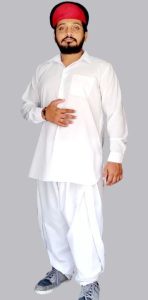
Image – Source
The Dhoti and Kurta are traditional garments worn by men across India, and Rajasthan is no exception. The Dhoti is a long piece of cloth, usually white or cream, that is wrapped around the waist and legs.
It is paired with a Kurta, a long tunic that can be simple or elaborately embroidered, depending on the occasion. This combination is particularly popular during religious ceremonies, festivals, and casual gatherings in Rajasthan.
The Dhoti and Kurta are designed to provide comfort in the region’s hot climate, with the cotton fabric allowing for breathability and ease of movement.
For special occasions, men may opt for a silk Dhoti with intricate borders paired with a richly embroidered Kurta. This attire represents the simplicity and cultural depth of traditional Indian menswear, especially among the older generation and rural communities.
Dhoti & Kurta Dress Details
| Attribute | Details |
| Dress Name | Dhoti & Kurta (for men). |
| Cultural Significance | Represents traditional Indian menswear, commonly worn during religious ceremonies and festivals. |
| Fabric & Material | Usually made from cotton for everyday wear, with silk versions for formal occasions. |
| Key Design Features | The Dhoti is a long piece of unstitched cloth, while the Kurta is a tunic, often embroidered or printed. |
| Draping Style | The Dhoti is wrapped around the waist and legs, while the Kurta is worn over it. |
| Occasion-Based Wear | Worn during festivals, religious gatherings, and casual social events. |
| Traditional Accessories | Paired with a Pagri (turban) and sometimes with traditional jewellery like ear studs or waist sashes. |
| Historical Origins | Dhoti has been worn for centuries in India, symbolizing simplicity and tradition, with the Kurta adding cultural depth. |
| Regional Variations | Variations in the draping style of the Dhoti and the length or design of the Kurta are seen across different regions of Rajasthan. |
| Common Colour Schemes | White, cream, or beige for everyday wear, while festive versions may feature coloured borders or embroidery. |
| Modern Adaptations | Designers have modernized the Dhoti and Kurta by adding contemporary cuts and patterns for formal occasions. |
| Craftsmanship | Handcrafted, especially for festive wear, with Dhoti made from fine fabrics and Kurta showcasing intricate embroidery. |
| Practicality & Comfort | Offers great comfort and breathability, making it ideal for the hot desert climate. |
| Symbolism & Meaning | Represents tradition, simplicity, and the cultural heritage of Indian menswear. |
| Celebratory Role | Essential attire for religious ceremonies, festivals, and formal family gatherings. |
| Market Availability & Cost | Available(continuation of **Top 10 Rajasthani Traditional Dress |
8. Pagri (Turban) (Men)
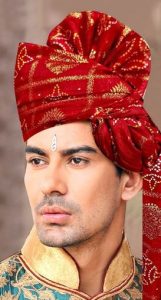
Image – Source
The Pagri, also known as Safa, is a traditional Rajasthani turban worn by men, symbolizing pride, honor, and cultural identity. The way the Pagri is tied, its colour, and its design can signify the wearer’s social status, region, and even the occasion.
Pagris are typically made from cotton or silk and vary in size, style, and colour depending on the event and the wearer’s caste or community. In Rajasthan, different regions have unique styles of tying the Pagri, such as the angular Pagris of Jaipur or the flat ones in Udaipur.
A Pagri is much more than just headwear; it is a symbol of respect and tradition in Rajasthan, worn during weddings, religious ceremonies, and festivals like Teej and Holi.
For important occasions, the Pagri is often richly decorated with embroidery or jewels, while everyday versions are simpler. The significance of the Pagri extends beyond Rajasthan, as it remains a symbol of pride for Indian men across the country.
Pagri Dress Details
| Attribute | Details |
| Dress Name | Pagri or Safa (for men). |
| Cultural Significance | Represents honor, pride, and respect in Rajasthani culture, often worn during formal events and religious ceremonies. |
| Fabric & Material | Made from cotton or silk, with occasional use of decorative elements like embroidery or jewels for special events. |
| Key Design Features | The length, colour, and style of the turban vary by region and social status, with some featuring intricate embroidery or embellishments. |
| Draping Style | The cloth is wrapped around the head in various styles, depending on the region and occasion, like angular in Jaipur and flat in Udaipur. |
| Occasion-Based Wear | Worn during weddings, religious ceremonies, festivals, and as part of daily attire in rural areas. |
| Traditional Accessories | Paired with traditional attire like the Angrakha or Dhoti and often complemented with accessories like brooches. |
| Historical Origins | Originates from royal and warrior traditions, where the Pagri symbolized valour and honour. |
| Regional Variations | Different regions in Rajasthan have distinct styles of tying the Pagri, each signifying cultural or social differences. |
| Common Colour Schemes | Bright colours like red, orange, and pink for weddings and festivals, while neutral tones like white and beige are worn daily. |
| Modern Adaptations | Modern versions of the Pagri are often smaller and less elaborate, and they are used in contemporary fashion for formal events. |
| Craftsmanship | Handcrafted by expert turban makers, who create various styles based on the cultural and ceremonial significance of the occasion. |
| Practicality & Comfort | The lightweight cotton or silk fabric allows for comfort, even in the hot desert climate, making the Pagri both practical and traditional. |
| Symbolism & Meaning | It represents honour, pride, and the cultural identity of the wearer, which is often passed down through generations in Rajasthan. |
| Celebratory Role | Essential for weddings, festivals, and other significant life events, symbolizing respect and joy. |
| Market Availability & Cost | Widely available, from affordable daily wear options to elaborately embroidered Pagris for special occasions. |
9. Mojari Shoes (Men & Women)
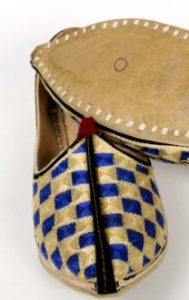
Image – Source
Mojari shoes are a traditional form of footwear in Rajasthan, worn by both men and women. These handcrafted shoes are made from leather, usually camel or goat skin, and are often adorned with colourful embroidery, beads, and even sequins.
Mojaris are not only a practical form of footwear, providing comfort in the hot desert climate, but they are also a reflection of Rajasthan’s rich artisanal heritage.
They are traditionally worn with Dhoti-Kurta for men or Ghagra Choli for women, making them a staple accessory for weddings and festive occasions.
The intricate designs on Mojari shoes are often inspired by Rajasthani architecture, with patterns resembling arches, domes, and floral motifs.
These shoes come in a variety of styles, with some being open-backed while others have closed toes. The appeal of Mojari shoes lies in their versatility; they can be worn for both everyday use and formal events, adding a touch of cultural elegance to any outfit.
Mojari Shoes Dress Details
| Attribute | Details |
| Dress Name | Mojari (for men and women). |
| Cultural Significance | Symbolizes the traditional craftsmanship of Rajasthan, worn during weddings, festivals, and cultural performances. |
| Fabric & Material | Made from leather (camel, goat, or sheep skin), often decorated with colourful embroidery, beads, and sequins. |
| Key Design Features | Handcrafted with intricate patterns and embellishments inspired by Rajasthani architecture and art. |
| Draping Style | Typically worn with traditional attire like Dhoti-Kurta for men and Ghagra Choli for women. |
| Occasion-Based Wear | Worn during weddings, religious ceremonies, and other formal events, but also suitable for casual daily wear. |
| Traditional Accessories | Often paired with traditional clothing and jewellery to complete the cultural look. |
| Historical Origins | Mojari shoes date back to the royal courts of Rajasthan, where they were worn by kings and noblemen. |
| Regional Variations | Different regions of Rajasthan showcase variations in embroidery styles and colours, such as Jodhpur and Jaipur designs. |
| Common Colour Schemes | Natural leather tones like brown and tan, with brightly coloured embroidery and embellishments for festive wear. |
| Modern Adaptations | Designers have incorporated modern soles and contemporary designs into Mojari shoes, making them more versatile for everyday wear. |
| Craftsmanship | Handcrafted by skilled artisans, Mojari shoes are made using traditional techniques passed down through generations. |
| Practicality & Comfort | The soft leather and flexible sole make Mojaris comfortable for walking long distances, while still providing a traditional aesthetic. |
| Symbolism & Meaning | It represents the artisanal heritage of Rajasthan and symbolizes cultural pride and craftsmanship. |
| Celebratory Role | Essential footwear for weddings, festivals, and other significant cultural events, symbolizing prosperity and tradition. |
| Market Availability & Cost | Available in both high-end bespoke designs and more affordable versions, with prices varying based on craftsmanship and materials used. |
10. Lehenga (Women)
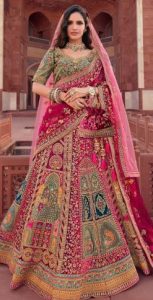
Image – Source
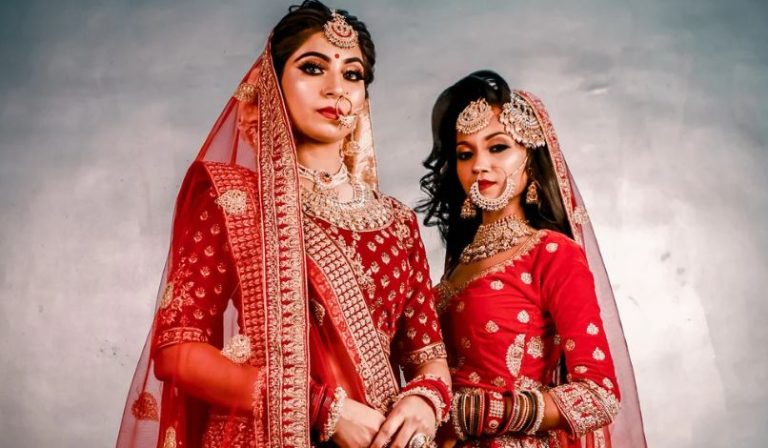
The Lehenga is a modern evolution of the Ghagra and is one of the most popular traditional outfits worn by women, especially during weddings and festive occasions. Unlike the Ghagra, which is more traditional and simple, the Lehenga is a heavily embellished skirt, often paired with a matching blouse and a Dupatta or veil.
The Lehenga is known for its voluminous design and elaborate embroidery, making it a luxurious garment that symbolizes grace and elegance. It is commonly worn by brides and other women attending weddings and large cultural events.
The Lehenga is often made from luxurious fabrics such as silk, velvet, or brocade and adorned with intricate Zari, Zardozi, or Gota Patti work. In recent years, designers have infused contemporary elements into the traditional Lehenga, experimenting with cuts, colours, and designs.
The Lehenga is typically paired with heavy jewellery, including Kundan necklaces, earrings, and bangles, completing the regal look. Its modern adaptations have made it a favourite not just in Rajasthan but across India and beyond.
Lehenga Dress Details
| Attribute | Details |
| Dress Name | Lehenga (for women), paired with a blouse and Dupatta or veil. |
| Cultural Significance | Worn during weddings, cultural events, and festivals, symbolizing elegance, femininity, and tradition. |
| Fabric & Material | Made from luxurious fabrics like silk, velvet, brocade, and chiffon, often adorned with Zari, Zardozi, or Gota Patti embroidery. |
| Key Design Features | A voluminous skirt with intricate embroidery is paired with a matching blouse and dupatta, creating a regal look. |
| Draping Style | The Dupatta is often draped across the shoulder or head, while the skirt flares out in a wide circular design. |
| Occasion-Based Wear | Primarily worn during weddings, receptions, and other formal events, with the bride’s Lehenga being the most elaborate. |
| Traditional Accessories | Paired with heavy jewellery like Kundan sets, earrings, bangles, and anklets to enhance the overall look. |
| Historical Origins | Originates from traditional Rajasthani and North Indian garments, evolving from the Ghagra into the more modern and elaborate Lehenga. |
| Regional Variations | Variations in embroidery and fabric choices exist across different regions, with Rajasthan and Gujarat being major centres for Lehenga craftsmanship. |
| Common Colour Schemes | Bridal Lehengas are typically red or maroon, while festive Lehengas come in a wide range of vibrant colours like royal blue, pink, and gold. |
| Modern Adaptations | Modern designers have incorporated new cuts, lighter fabrics, and contemporary colour palettes into the traditional Lehenga, making it popular worldwide. |
| Craftsmanship | Handcrafted by skilled artisans, using time from traditional designs, ensuring that each Lehenga is unique in its craftsmanship. |
| Practicality & Comfort | Despite the heavy embroidery, the skirt’s structure allows for ease of movement, especially during dancing and celebrations. |
| Symbolism & Meaning | Represents femininity, elegance, and cultural heritage, making it the preferred choice for brides and women during significant life events. |
| Celebratory Role | Essential attire for weddings, receptions, and formal gatherings, symbolizing prosperity and joy. |
| Market Availability & Cost | Available in a range of prices, from affordable options for festive wear to high-end designer Lehengas for weddings, often bespoke in design. |
Conclusion
Rajasthan’s traditional dresses are more than just garments; they are a reflection of its history, cultural values, and artistic legacy. Each outfit, from the flamboyant Ghagra Choli to the classic Angrakha and Mojari shoes, encapsulates the pride and heritage of the Rajasthani people.
These timeless attires remain popular, not only in local ceremonies but also globally, with modern designers continuously drawing inspiration from them.
Rajasthan’s clothing reflects the state’s resilience, beauty, and vibrant lifestyle, making these traditional outfits a lasting symbol of its rich cultural tapestry. As the world embraces fusion fashion, Rajasthani attire remains a key influence, bridging tradition and contemporary style seamlessly.
FAQs
What makes the Ghagra Choli a popular Rajasthani outfit?
The Ghagra Choli is celebrated for its vibrant colours, intricate embroidery, and cultural significance, making it a staple at festivals and weddings.
Why is the Bandhani Saree unique to Rajasthan?
The Bandhani Saree is known for its distinctive tie-dye technique, where fabric is tied and dyed in beautiful patterns, representing Rajasthan’s artistic heritage.
What is the significance of the Pagri in Rajasthani attire?
The Pagri symbolizes honour and pride, with different colours and styles representing the wearer’s caste, region, or occasion.
How has the Rajputi Poshak evolved over time?
While maintaining its royal elegance, the Rajputi Poshak has evolved with modern cuts and embellishments, making it popular in both traditional and contemporary fashion.
When is the Jodhpuri Suit typically worn?
The Jodhpuri Suit is worn during formal occasions like weddings, combining regal Indian traditions with a Western silhouette.
What materials are typically used in Rajasthani Mojari shoes?
Mojari shoes are handcrafted from leather, often camel or goat skin, and embellished with intricate embroidery.
How does the Angrakha outfit reflect Rajasthani tradition?
The Angrakha was historically worn by royals and warriors, symbolizing protection and elegance, and continues to be a part of festive and formal wear today.